
Rebuild once.
Built for the next one.
Every StackHaus home is built from reinforced ICF concrete — not wood. Here's what that means for fire, wind, insurance, energy, and the design of your home.
4-Hour
Fire Rating
185+ mph
Wind Rated
R-30+
Insulation
100+ Yrs
Design Life
Why StackHaus
Four commitments. One contract.
Every StackHaus project is built on the same four principles — designed to remove risk, uncertainty, and fragmentation from your rebuild.
Fixed Price
Lock your budget upfront. No change orders, no overruns, no surprises — from feasibility study to move-in.
Insurance Advocacy
Engineering-grade documentation to support your claim. We advocate alongside you throughout the process — we're not a public adjuster and don't guarantee an outcome.
Concrete Construction
Reinforced ICF concrete — non-combustible, 185 mph wind-rated, 100+ year design life. Built for the next event.
Single Contract
One accountable team from land to move-in. No vendor management, no fragmented responsibility, no gaps.
Insulated Concrete Form — your home's skeleton is solid concrete.
Foam forms are stacked, filled with rebar and poured concrete, then left in place as permanent insulation
ICF is not poured concrete alone — it's a system. Interlocking foam forms act as stay-in-place molds, creating a monolithic concrete core reinforced with rebar. The foam never comes off: it becomes R-30+ insulation on both sides. The result is a wall that is structurally superior, thermally efficient, and non-combustible.
- Foam forms stack like Lego — precision, no waste
- Rebar is set inside before the concrete pour
- Concrete fills the core — monolithic structural wall
- Foam stays as permanent insulation (R-30+ total)
- Any exterior finish goes over the foam: stucco, stone, board-and-batten
ICF Wall Cross-Section
What's actually inside your wall
Total Wall R-Value: R-30+ continuous insulation
Non-combustible by definition. It simply does not burn.
Wood ignites at 451°F. Wildfires burn at 1,100–1,800°F. ICF concrete holds for 4+ hours.
The ASTM E119 standard fire test exposes walls to temperatures reaching 1,925°F over 4 hours. ICF concrete walls maintain structural integrity through the full test. Wood-frame walls fail in under an hour. In a wildfire, the difference isn't measured in damage — it's measured in whether your home still stands.
- 4-hour fire-resistance rating (ASTM E119)
- Non-combustible structural system — no organic material to ignite
- Exterior ember intrusion cannot reach combustible framing
- WUI (Wildland-Urban Interface) code compliant by default
- Class A fire assembly — top tier classification
ASTM E119 Fire Test
Standard fire exposure — 1,925°F at 4 hours
Fails structural integrity
Maintains structural integrity
Wood ignites at 451°F. Wildfires burn at 1,100–1,800°F.
Concrete does not ignite. Period.
Engineered for 185+ mph. Hurricanes are a non-event.
A monolithic concrete wall has no fasteners to fail, no sheathing to delaminate, no stud gaps to exploit.
Wind resistance in wood-frame homes relies on connector hardware — metal clips, hangers, and nails. Under sustained hurricane loads, these connections fail progressively. ICF concrete walls are monolithic: a single continuous structural system from foundation to roof plate. There's nothing to peel, nothing to separate, nothing to shred.
- 185+ mph sustained wind rating — engineered and tested
- Monolithic wall — no connector-hardware failure points
- Positive and negative pressure resistance built in
- Florida High Velocity Hurricane Zone (HVHZ) compliant
- No plywood sheathing to delaminate or blow off
Wind Resistance
Monolithic ICF wall system
185+
mph rated
Quieter, cooler in summer, warmer in winter. 20–40% less energy.
Thermal mass + R-30+ continuous insulation = a home that works harder and costs less to run.
Wood-frame walls have R-values interrupted at every stud — thermal bridging bleeds energy constantly. ICF's R-30+ continuous insulation has no interruptions. Add concrete's thermal mass (which absorbs heat during the day and releases it overnight) and you get a home that stabilizes temperature naturally. HVAC barely works. Sound from outside is reduced 50–70%.
- R-30+ continuous wall insulation — no thermal bridging
- 20–40% reduction in annual heating and cooling costs
- 50–70% better sound isolation vs. wood stud construction
- Concrete thermal mass acts as a natural climate battery
- Improved indoor air quality — no mold-prone wood framing
Energy & Comfort Performance
ICF walls vs. wood stud
🌡️
20–40%
HVAC Savings
🔇
50–70%
Sound Reduction
🏠
R-30+
Wall R-Value
⏳
100+ yrs
Design Life
💡 Thermal mass naturally regulates temperature — less HVAC work, lower bills, more comfortable home year-round.
Carriers are exiting wood. Concrete is what they'll insure.
In CA and FL, non-combustible construction is increasingly the only construction insurers want to cover.
State Farm, Farmers, and Allstate have restricted or exited California and Florida markets. The carriers staying are imposing steep premium increases on wood-frame homes in WUI and hurricane zones — or refusing new policies entirely. Concrete homes present a fundamentally different risk profile: non-combustible, flood-resistant, wind-rated. Documented premium reductions of 10–40% in these markets.
- Non-combustible = preferred by fire-zone carriers
- ~40% premium reduction in WUI zones (documented)
- Better availability from admitted carriers in CA and FL
- Lower risk of policy non-renewal after weather events
- Replacement value more stable — one build, not cyclical rebuilds
Insurance Advantage
Concrete vs. wood frame in CA/FL
~40% premium reduction documented in WUI zones for non-combustible construction.
Design Flexibility
Any style. Concrete structure underneath.
The exterior of an ICF home is finished exactly like any other home. You'd never know it was concrete. That's the point.
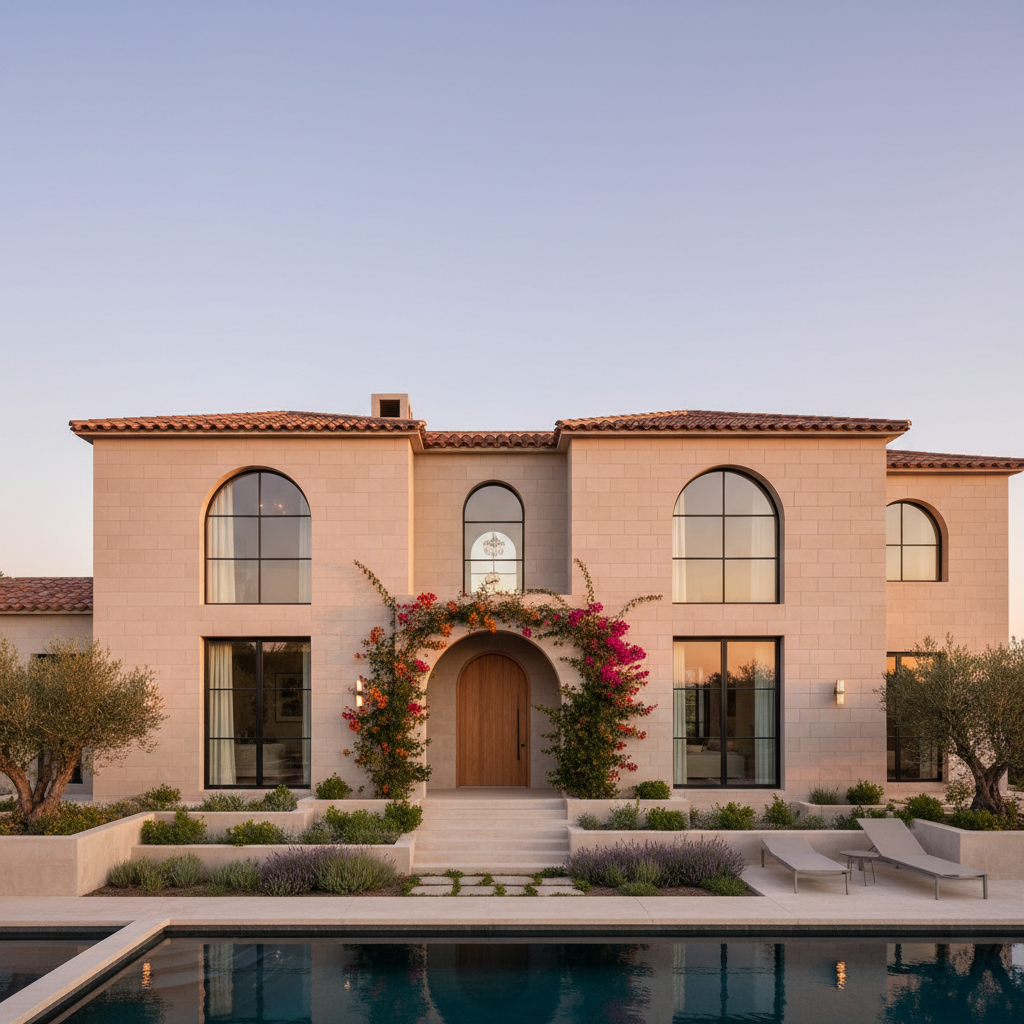
🏛️ Mediterranean
Arched windows, stucco cladding, clay tile roofline — indistinguishable from wood frame.
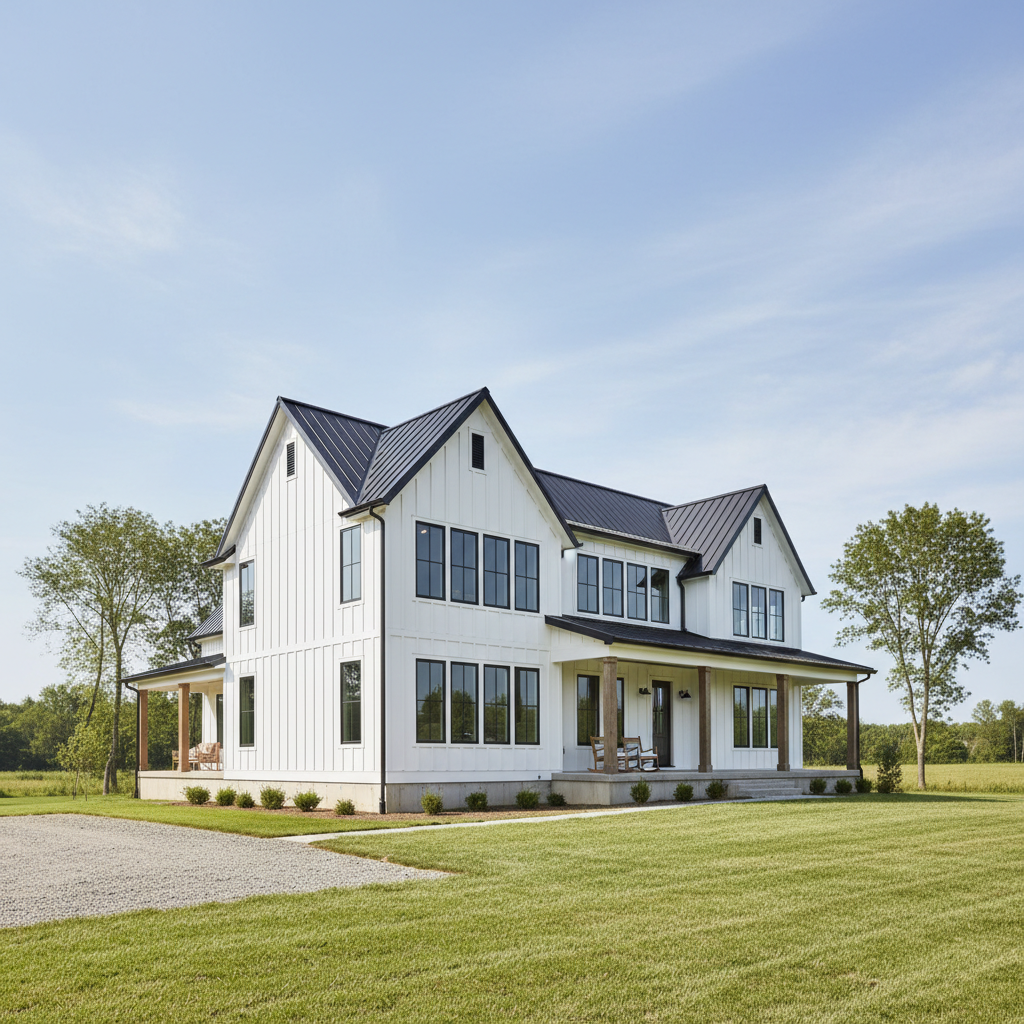
🏠 Modern Farmhouse
Board-and-batten, black trim, steep gable — any exterior finish over the concrete core.
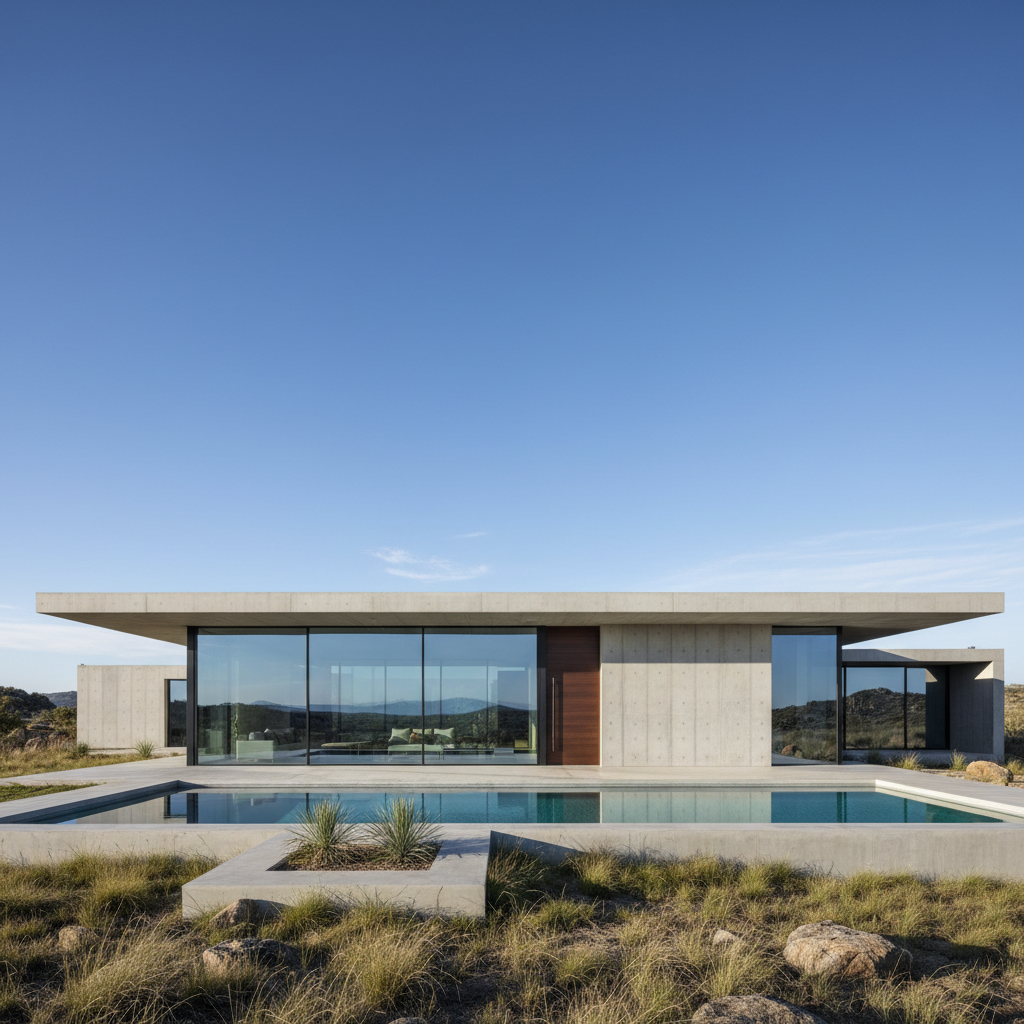
🔲 Contemporary
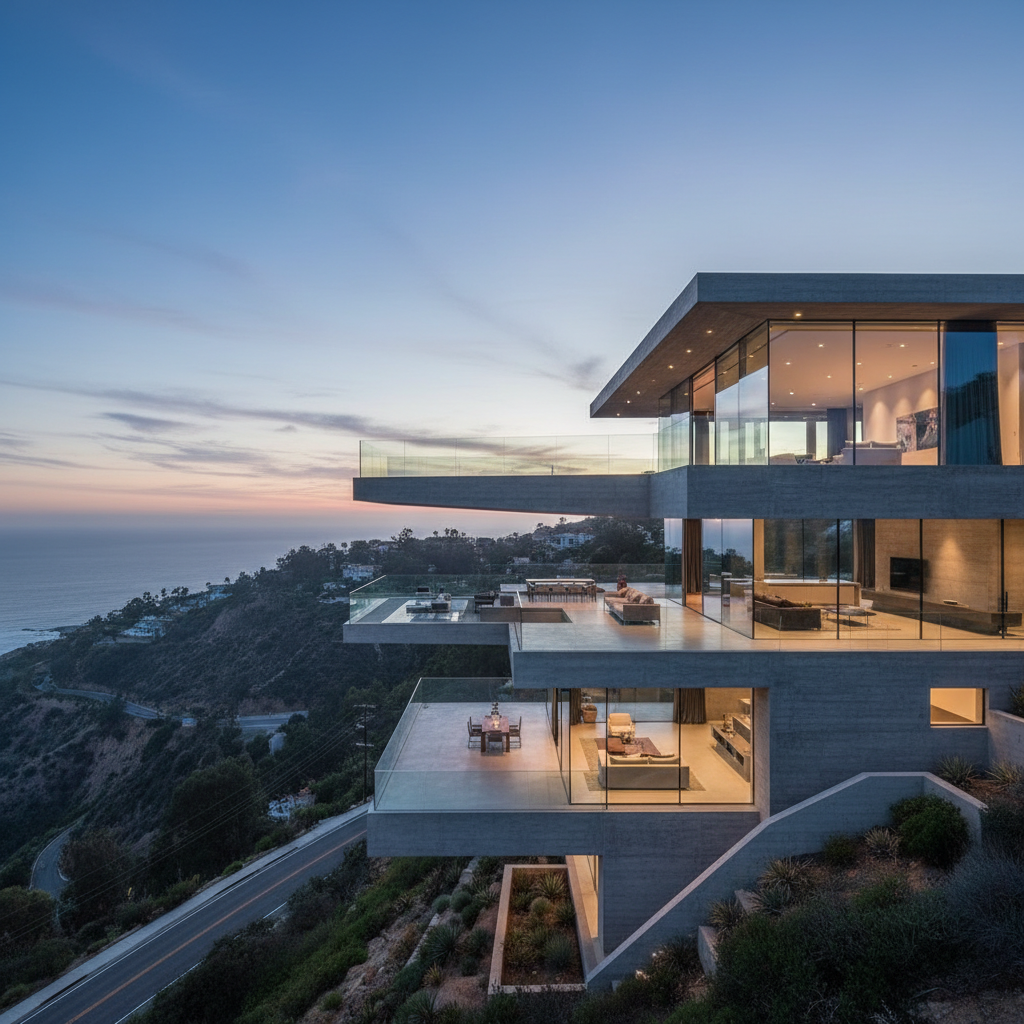
Clean lines, flat roof, floor-to-ceiling glass — designed around your site and views.
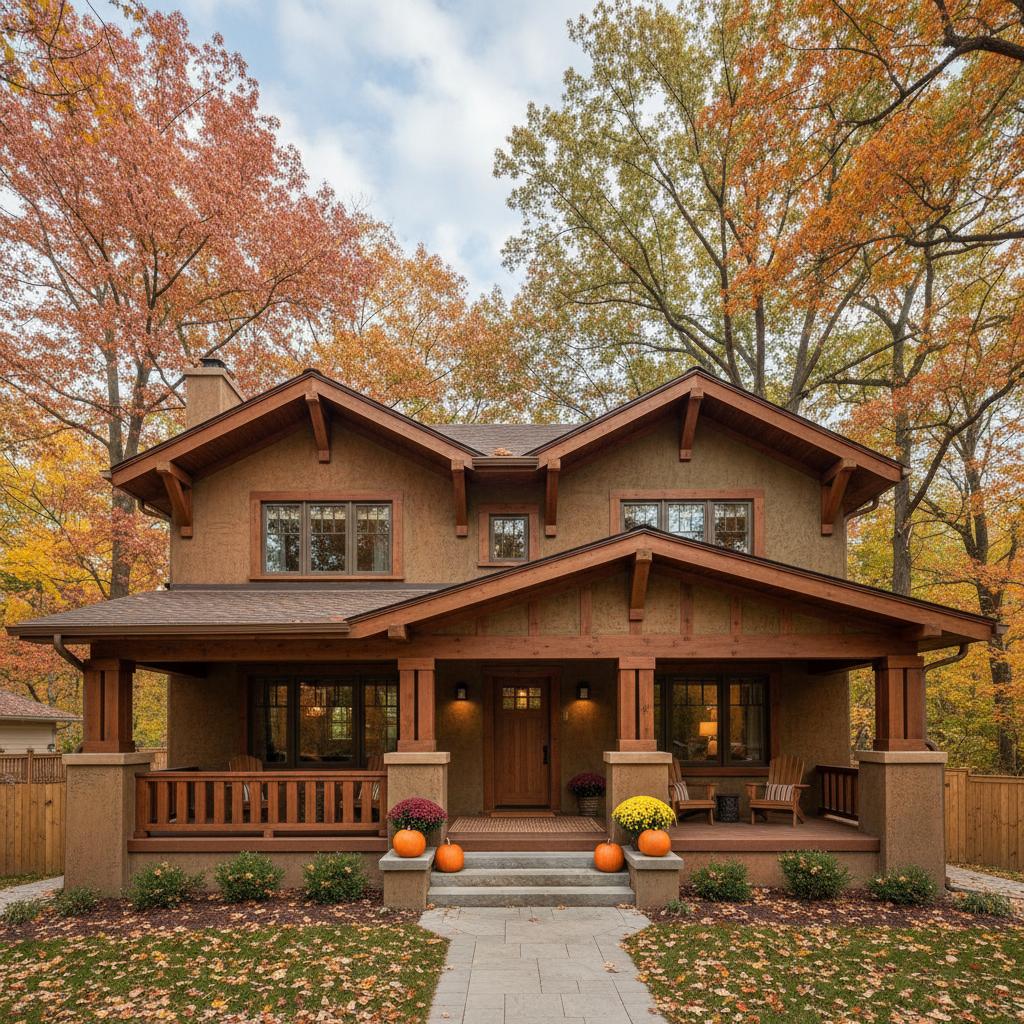
🪵 Traditional Craftsman
Wood-look trim, deep overhangs, covered porch — you'd never know it was concrete.
ICF Concrete vs. Wood Frame
Every category. No spin.
| Category | ✅ ICF Concrete (StackHaus) | 🪵 Wood Frame (Conventional) |
|---|---|---|
| Fire resistance | Non-combustible — 4-hour fire rating (ASTM E119) | Combustible — fails under 1 hour in wildfire conditions |
| Wind resistance | 185+ mph — monolithic structural wall | ~80–110 mph typical — connector hardware fails |
| Flood durability | Concrete core — no mold risk, no rot | Absorbs moisture — mold within 24–48 hours |
| Seismic | Ductile rebar design — PE-stamped for zone-specific loading | Flexible diaphragm — less predictable under lateral load |
| Insurance | Non-combustible classification — ~40% premium reduction | Standard rates — increasing in high-risk zones |
| Insulation | R-30+ continuous — no thermal bridging | R-14 to R-20 — air leakage at every stud |
| Design life | 100+ years — no organic material to decay | 60–80 years — termite, rot, and paint failure risk |
Common Questions
Rebuild once
Start with a free feasibility study.
We assess your site, insurance position, and project parameters — then show you exactly what a concrete rebuild would cost and deliver.
Serving CA · TX · FL · GA